
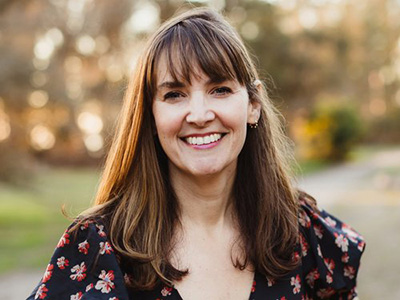
Photo Credit: Rhonda Lee Johnson
When my husband was diagnosed with Type 1 diabetes as an adult, it came completely unexpectedly. There was no family history, and like many families facing a chronic disease diagnosis, we found ourselves searching for ways to support his long-term health and well-being alongside the medical care he would always need.
That search led us to explore the relationship between nutrition and health. A friend shared a copy of The China Study by T. Colin Campbell, PhD, which sparked our curiosity about the role dietary patterns may play in chronic disease risk and overall health outcomes. While no single book or approach provides all the answers, it opened the door to questions we hadn’t considered before and inspired us to learn more.
Where Our Journey Began
In 2011, we were at Cottage Hospital awaiting the birth of our first child when my husband had just finished reading the book, he shared that he wanted to spend the next three months eating a completely plant-based diet to see how his body responded. Despite the timing, I was fully on board.
There weren’t any plant-based options available at the hospital, so we started with three salads from the deli across the street. On the day I became a mother for the first time, we also began a journey that would ultimately reshape the way our family thought about food, health, and community.
What began as a short-term experiment became something much larger. Over time, my husband noticed meaningful improvements in how he felt and managed his diabetes. We became increasingly interested in the broader role nutrition could play in supporting lifelong health and well-being. Those experiences motivated us to keep learning and eventually transformed the way we approached our family and life.
We decided to continue eating this way and ultimately chose to raise our children in a home centered around plant-forward foods. What started as an effort to support one family member’s health became a shared family commitment.
A New Way of Life
As a new mother, I wanted to understand this way of eating completely. I spent countless hours reading, researching, learning to cook differently, and searching for reliable nutrition resources. The more I learned, the more fascinated I became by the connection between nutrition, lifestyle, and health outcomes.
At the same time, I discovered how difficult it was to find local support. When we started, we didn’t know anyone else eating this way. For the first five years of our journey, we largely navigated it on our own.
As my understanding grew, so did my passion. I enrolled in a plant-based nutrition certificate program through the T. Colin Campbell Center for Nutrition Studies and later pursued a Master’s Degree in Applied Clinical Nutrition to deepen my understanding of the science behind nutrition and health.
Along the way, I experienced benefits of my own. I found a healthy, sustainable weight, felt more energetic, and went on to have two additional pregnancies while eating a plant-forward diet. While everyone’s experience is different, those years reinforced my belief that nutrition can be a powerful tool for supporting overall health and quality of life.
My Catalyst for Rooted
A few years into our journey, I began reaching out to members of the local healthcare community to share our family’s experience and explore opportunities to build more education and support around nutrition.
I hoped to find curiosity, conversation, and resources in the healthcare community.
The response was mixed.
Some people were excited to hear our story and eager to learn more. Others were quick to dismiss the idea that nutrition could play a meaningful role alongside conventional care. Those conversations could be discouraging. I realized that discussions about food and health are deeply personal and that nutrition — even when supported by a growing body of research —can be difficult to talk about in healthcare settings.
At the same time, I couldn’t shake the feeling that our family wasn’t unique. I knew there were others in our community asking the same questions we once had: Where do I start? Who can help? What does the science say? How do I make changes that feel realistic and sustainable?
Yet there were very few local resources to turn to.
That realization became a turning point for me. Instead of becoming discouraged by what was missing, I became motivated to help build it.
I met healthcare professionals, educators, researchers, and advocates who were committed to expanding access to evidence-based nutrition education and lifestyle medicine. Those relationships showed me that while resources were limited, there was growing interest and tremendous opportunity.
As those conversations continued, I began to see the possibility of something larger than my own story.
What started as a family’s search for answers evolved into a community effort to create the kind of support system I wish we’d had from the beginning.
Rooted Santa Barbara County was born from that vision.
Building a Community Around Health
My professional background is in nonprofit fundraising. I spent much of my career helping arts organizations build community around shared missions, most notably at the Santa Barbara Bowl. I’ve seen firsthand how nonprofits can bring people together, create opportunities for innovation, and help communities address challenges in meaningful ways.
Several years ago, I sat down and mapped out what a nonprofit focused on nutrition and lifestyle medicine education could look like. Since then, that vision has grown beyond anything I originally imagined.
Today, Rooted represents a diverse coalition of healthcare professionals, educators, advocates, and community members working together to empower health through evidence-based nutrition and lifestyle education.
I’m proud that Rooted has become more than one family’s story. It has become a community conversation—one grounded in curiosity, collaboration, and the belief that everyone deserves access to information and support that can help them make informed choices about their health.
Looking Forward
Today, I’m a mother of three and remain deeply inspired by the opportunities nutrition offers for supporting health and well-being.
Not because food is a silver bullet—it isn’t. Health is complex and influenced by many factors. But food is one of the ways we care for ourselves every day, and small, sustainable changes can have a meaningful impact over time.
At Rooted, we believe health conversations should be grounded in compassion, evidence, and empowerment. We believe people deserve options. We believe communities are stronger when healthy choices are accessible and supported. And we believe that when people understand the connection between food and health, they are better equipped to write their own health story.
There’s power in our plates—and even more power in helping one another discover what’s possible.
A nutritious diet can improve many health conditions such as high blood pressure, high cholesterol, and diabetes, but this is not a substitute for medical advice. Always consult your healthcare team when making lifestyle changes, even healthy ones. Your doctor can offer medical guidance, individual support and adjust medications, if needed.
Beth Skidmore, MSACN is Chair and Volunteer Executive Lead for Rooted Santa Barbara County. Beth is a lifestyle nutritionist with a master’s degree in Applied Clinical Nutrition, public health advocate, mother of a plant-forward family, and a nonprofit fundraising professional who has helped build community around shared missions for local and national nonprofits.
Video: Rethinking Protein with FoodBank SBC
Protein is a hot topic. It’s likely the number one nutrient on most people’s mind when they think about food. So, when...
Your Best Health Is Rooted in Prevention
Welcome to Rooted Santa Barbara! We’re here to fill a critical gap in local healthcare: preventive health through...
What Is Whole-Food Plant-Based?
What do you think of when you hear “whole food, plant-based?” Is it a vegan diet? Is it extreme dieting? Does it sound...
Supporting Our Work - We’re currently an all-volunteer organization and we see incredible room and need to grow over the coming year. We understand that this time has enormous challenges for everyone, so while we’ll be seeking support to help roll our vision forward, we’re also thinking creatively to keep our costs low to efficiently build resources and deliver programming at low to no cost to our community. If you’d like to support our work, we hope you’ll consider making a donation to one of our giving programs through our community partner, the Santa Barbara Foundation!


